Buying · 4 min read
Do You Need a Buyer's Agent in New York?

Adeel Razzaq
Licensed Real Estate Associate Broker
Published · Updated

Do you need a buyer’s agent in New York? I approach that as a decision about representation and the help you want through the purchase, not a reason to pressure you into signing something you do not understand. The useful conversation covers services, expectations, compensation, and how the relationship fits your search.
I'm Adeel Razzaq, a Licensed Real Estate Associate Broker at Signature Premier Properties in Merrick.
Decide what help you want from representation
Buying involves more than arranging access to homes. A focused search begins with your routines, essential needs, financing stage, and timing. I help turn those priorities into a shortlist and refine it as you learn from actual properties. An attractive listing is not automatically a suitable home, particularly if the layout, maintenance responsibilities, or location do not support the way you expect to live.
At showings, consistent notes are more useful than an impression shaped entirely by furnishings. Look at room proportions, storage, light, condition, and the relationship between indoor and outdoor space. Keep unresolved questions visible. I help organize the property comparison, but important school, zoning, and service questions should be checked with the appropriate official sources rather than inferred from a description.
The home buyer guide treats the purchase as a sequence of decisions rather than one large event. Representation can help connect the search, comparable-sales review, offer preparation, and communication with other participants. Before deciding on a relationship, ask what services are included and how they will be delivered. The answer should be specific enough that you can judge whether it meets your needs.
Read the written agreement before proceeding
Written buyer agreements should be understood before a represented search proceeds. Read the actual document rather than relying on a verbal summary. Ask what services it covers, which properties or areas fall within its scope, and how long it lasts. I want the starting conversation to leave you clear about the relationship, not uncertain about what you have just accepted.
Discuss what the agreement says about changing or ending the arrangement. Your plans may evolve, so unfamiliar terms should be addressed before they become relevant to an offer. Keep a signed copy with your financing and purchase records. If a provision needs legal interpretation, consult your attorney; an explanation of the process should not substitute for advice about your contractual obligations.
Compensation is negotiable. Ask how it would be handled if a seller contributes, contributes nothing, or contributes an amount different from your agreement. Do not assume every listing resolves the expense in the same way. Your possible out-of-pocket obligation belongs in the budget early. This is a discussion about the written arrangement and your responsibilities, not a claim that New York law requires an agreement before every tour.
Free tool
Affordability Calculator
A comfortable price range based on your income, debts and cash.
Use property evidence without losing your budget
A buyer’s offer should connect comparable sales with the home’s condition and competitive position. County and town figures provide context, not automatic instructions to offer above or below asking. I help review the evidence and organize terms, but the amount you choose must also fit your financial life. Set a limit while you can think calmly rather than discovering it during an urgent negotiation.
The affordability tool can help organize a preliminary scenario, but a lender must confirm financing. Include property taxes, insurance, maintenance, and building charges where relevant rather than treating principal and interest as the whole ownership budget. Prepare income, asset, and debt records, and discuss financial changes with the lender. A purchase plan should preserve room for ordinary expenses and reserves after closing.
Closing costs also need their own line in the cash plan. Under the shared Nassau rules, mansion tax applies at $1 million and above, and the mortgage recording tax input is an editable estimate for a non-co-op loan. Co-op loans have no mortgage recording tax. County, price, loan amount, and property type matter, so ask your attorney and lender to confirm the charges instead of copying another buyer’s total.
Keep professional roles and decisions clear
An agent does not replace an attorney, inspector, or lender. Your attorney handles legal interpretation and contract questions, an appropriate inspector evaluates the agreed scope of condition review, and the lender confirms financing requirements. I help keep the search and communication organized. Clear roles make it easier to direct a question to the person equipped to answer it rather than accepting an improvised assurance.
An accepted offer alone is not the same as a completed contract in New York. Confirm the sequence of inspections, attorney review, and signing for the specific transaction. Discuss financing, contingencies, included property, credits, and timing deliberately. A market headline is not a reason to abandon diligence, and an enthusiastic conversation is not a substitute for understanding when obligations become binding.
If you are considering working with me, bring your priorities, financing questions, and any deadlines to a buyer consultation. I will focus on whether the proposed process fits your needs and what still requires clarification. You should understand the services, written terms, and likely cash commitments before deciding. My role is to help you make an informed choice, not push you toward a home or relationship you do not understand.
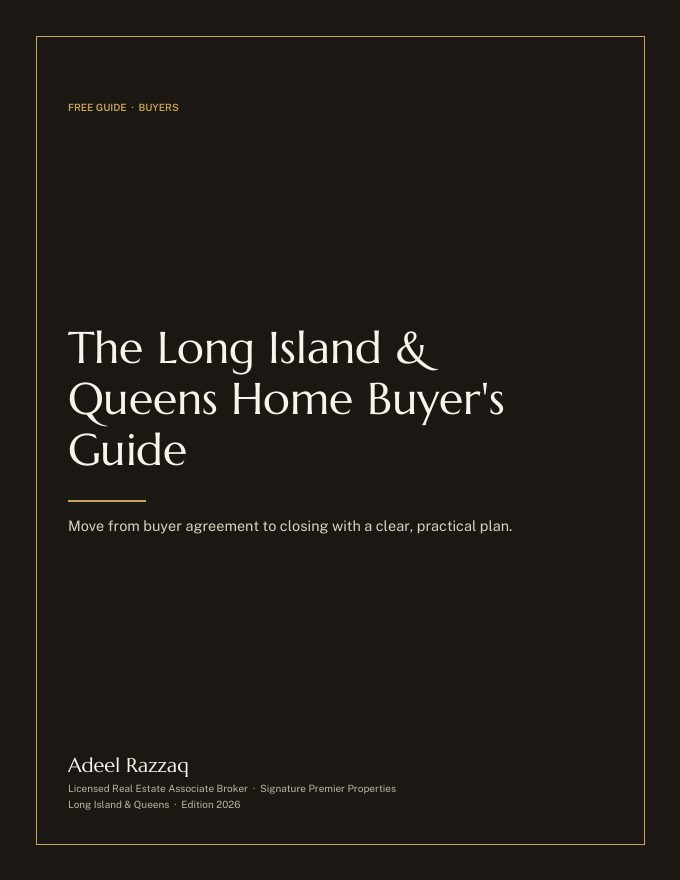
Free PDF guide · 12 pages
The Long Island & Queens Home Buyer's Guide
Move from buyer agreement to closing with a clear, practical plan.
General information only — not legal, tax or financial advice. Consult a NY real estate attorney.